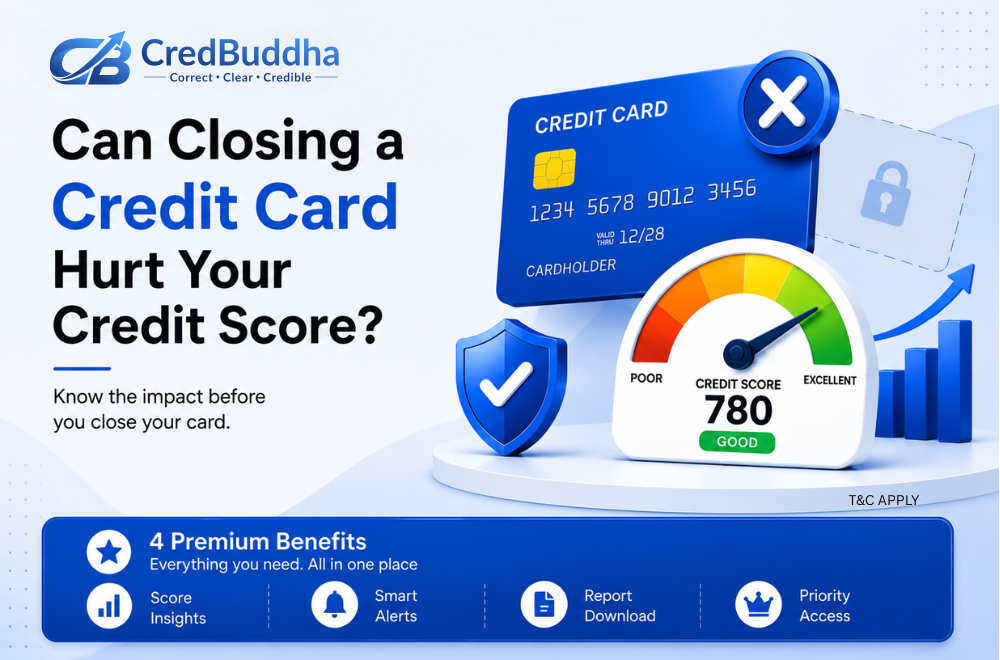
Many borrowers ask, does closing a credit card hurt your credit score? The answer depends on factors like your credit utilization ratio, credit history length and overall credit card and credit score relationship. In this blog, we explain how closing a credit card can affect your credit score after closing a credit card and what you should know before making a decision.
How Does a Credit Score Work?
Your credit score is a number. It tells lenders how you've handled borrowed money so far. In India, that number is your CIBIL score and it falls somewhere between 300 and 900. Cross 750 and most lenders will call that a good credit score, sometimes even an excellent one. CIBIL score and credit cards aren't the whole picture, though. Bureaus such as Experian, Equifax and CRIF High Mark also keep a record of your credit behaviour. Before approving a credit card, personal loan or home loan, banks and NBFCs usually check at least one of these.
There isn't one single habit behind this number. It's shaped by several factors, tracked over time and each one carries a different weight.
| Factor | Weightage |
| Payment History | 35% |
| Credit Utilization | 30% |
| Credit History Length | 15% |
| New Credit | 10% |
| Credit Mix | 10% |
Payment history and your credit utilization ratio together account for almost two - thirds of your score. That's the main reason closing a credit card deserves some thought first. It changes your utilization almost the moment it happens.
Does Closing a Card Affect Your Score?
Yes, it can. But how much depends on your own credit profile, not on some fixed rule that applies to everyone.
Closing a card doesn't touch just one thing. It affects five at once: your credit utilization, how long your credit history runs, your total available credit, the number of active accounts you have and how lenders read your overall credit behaviour.
In most cases, closing a credit card lowers your score for two main reasons. Your credit utilization ratio goes up and your average credit history length gets shorter. This dip is usually short - lived. It tends to be sharper, though, if the card is an old one, carries a high limit or gets closed just before you apply for a loan. For most people, the effect wears off within a few months, as long as other habits, like on - time payments, stay steady.
One more thing worth keeping in mind: there's no single, universal outcome here. A borrower with just one card and a thin credit file will feel this very differently from someone managing four or five cards responsibly. Your current utilization, how old the card is and your repayment record all play a part in deciding how much this one decision affects your credit score after closing a credit card.
Why Closing a Card Can Lower Scores
Higher Credit Utilization Ratio
The moment you close a card, your total available credit drops, even though your spending habits haven't changed. This pushes your utilization ratio up instantly.
Here's how it plays out in practice:
| Total Credit Limit | Outstanding Amount | Utilization | |
| Before closing | ₹3,50,000 (3 cards) | ₹70,000 | 20% |
| After closing a ₹1,50,000 - limit card | ₹2,00,000 | ₹70,000 | 35% |
That single move takes you past the recommended 30% utilization mark and bureaus tend to read higher utilization as higher risk. If you're set on closing a card, try clearing as much of your outstanding balance as possible first, so the jump in utilization is smaller.
Shorter Credit History
Lenders don't just look at your oldest account; they look at the average age of all your accounts. Closing your longest - held card lowers this average right away.
A simple rule of thumb: a card you've held for under a year won't do much damage if closed. But a card you've held for five years or more carries real weight and closing it can visibly dent your score. If your oldest card doesn't cost you anything to maintain, it's often worth keeping open with one small recurring payment, just to keep that history alive.
Reduced Credit Mix
Lenders like to see that you can responsibly manage different types of credit, not just one. This could mean a mix of credit cards, personal loans or other credit lines.
If the card you're closing is your only or last active credit card, your credit mix takes a hit. That said, credit mix accounts for just 10% of your overall score, so this alone shouldn't be a deciding factor.
If you already hold a personal loan or another form of credit alongside your card, this particular effect will barely register. It's mainly borrowers who rely on a single credit card as their only active credit line who should factor this in before closing it.
Reduced Available Credit
Banks see unused credit limits as a safety cushion, not as idle or wasted credit. It signals that you have room to spare if you ever need it.
When you close a card, that cushion shrinks. Even if your spending stays exactly the same, lenders may read this as a sign that you're now relying more heavily on the credit you do have.
This is closely tied to the utilization effect discussed earlier, but it's worth calling out on its own. Even borrowers who rarely carry a balance can see their score dip slightly once this buffer disappears, simply because the math behind utilization changes overnight.
Multiple Closures at Once
Closing more than one card in the same billing cycle is where things get risky. You end up with a bigger utilization spike and a sharper drop in average account age, both hitting your score at the same time.
A safer approach is to space out your card closures by at least three to six months. This happens to be one of the most common mistakes we see discussed on credit forums like Reddit's r/CreditCardsIndia, where people close two or three cards together and are surprised by the score drop that follows.
When Closing a Card Makes Sense
There are situations where closing a credit card is genuinely the right call:
The card charges a high annual fee that no longer matches its benefits.
You've faced repeated customer service issues or billing errors.
The card has been compromised or you have genuine fraud or security concerns.
You're holding two or more cards that offer nearly identical perks.
Your lifestyle has changed and the card's benefits (like travel perks) no longer apply to you.
You're upgrading to a better card. In this case, ask your issuer for a product conversion instead of a fresh closure, since this route protects your existing credit history.
When You Should Avoid Closing a Card
On the other hand, hold off on closing a card if:
It's your oldest credit card.
It doesn't charge an annual fee.
Your existing credit utilization is already on the higher side.
You're planning to apply for a loan in the near future.
It adds meaningfully to your credit mix.
It's a secured card or a starter/student card that's still helping you build your initial credit history.
You've recently opened several new credit lines, since closing a card now would add to the "new credit" impact you're already carrying.
Alternatives to Closing a Card
Before you close a card, it's worth exploring options that solve the same problem without the credit score risk:
Keep the card active with one small recurring purchase, like a subscription.
Ask your issuer for a credit limit increase which improves your utilization headroom instead of shrinking it.
Downgrade to a no - annual - fee variant of the same card.
Set up auto - pay for a small recurring bill so the card stays in use without effort.
Redeem your reward points before making any final decision, since they usually lapse on closure.
| Option | Effect on Utilization | Effect on History Length | Effort Required | Best For |
| Close the card | Increases | Shortens | Low | Fraud, high fees with no benefit |
| Downgrade | Neutral | Preserved | Low | Only issue is the annual fee |
| Keep dormant | Neutral | Preserved | Very low | Undecided or unused cards |
Downgrading is usually the safest middle path when your only concern is the annual fee, since it lets you keep the account and its history intact.
The Right Way to Close a Card
If you've weighed the alternatives and still want to close your card, doing it in the right order protects your score and your finances:
Clear all outstanding dues in full before initiating closure.
Redeem or transfer your reward points, as they lapse once the account closes.
Cancel any auto - payments or subscriptions linked to the card.
Submit a written closure request and keep the acknowledgment or reference number.
Confirm the closure in writing once done and cut up the physical card.
RBI rule to know: Once you've cleared your dues and submitted a closure request, your card issuer is required to close the account within 7 working days. If they delay beyond this, RBI mandates a penalty of ₹500 per day of delay, payable to you as the customer.
Credit Score Recovery Timeline
One thing most articles skip is a realistic timeline of what happens to your score after closure. Here's what borrowers can generally expect:
| Time Since Closure | What Typically Happens |
| 0 - 1 month | Utilization jump may show up as bureaus update in their next reporting cycle (often 30 - 45 days) |
| 1 - 3 months | Minor utilization - driven dips start recovering if balances stay low and payments are on time |
| 3 - 6 months | The history - length impact gradually fades as your remaining accounts continue aging |
| 6+ months | Score stabilizes; closed accounts in good standing can stay on your report for up to 10 years, still supporting your history length |
Effect on Personal Loan Eligibility
This is where closing a credit card can matter well beyond the number itself.
Credit score impact: Even a small, temporary dip can push you across an approval threshold with certain lenders.
Loan approval chances: A utilization spike right before you apply is one of the most common, self - inflicted reasons for rejection.
Interest rates: Lenders price their offers based on risk, so a lower score at the time of application can mean a higher interest rate.
Loan amount eligibility: A reduced score can also bring down the loan amount you're sanctioned, not just the rate you're offered.
Faster processing: A stable credit profile in the months before you apply usually means fewer manual checks and quicker approval.
Lenders don't just look at your overall history, they also look at what your credit profile looks like right now. Any recent, avoidable dip works against you at exactly the wrong moment.
Common Credit Card Myths
Let's clear up a few things people often get wrong:
"Closing a card always improves your score." False. In most cases, it does the opposite.
"Unused credit cards are harmful." False. They support your utilization headroom and often help more than they hurt.
"Having multiple credit cards automatically lowers your score." False. It's how responsibly you manage them that matters, not the number itself.
"Checking your own credit score reduces it." False. Self - checks count as soft inquiries and have no impact on your score.
"Only loan repayments affect your credit score." False. Your credit card behaviour matters just as much as your loan repayment record.
Tips to Maintain a Healthy Score
A few consistent habits go a long way in keeping your credit score strong:
Pay your bills before the due date, every time.
Keep your credit utilization under 30%.
Avoid applying for multiple loans or cards in a short span.
Check your credit report regularly for errors.
Keep older accounts active with light, occasional use.
Pay off your full outstanding balance, not just the minimum due.
Maintain a healthy mix of credit over time.
Credit Score Range Explained
Here's what different score ranges typically mean for your loan approval chances:
| Credit Score | Rating | Loan Approval Chances |
| 750 - 900 | Excellent | Very High |
| 700 - 749 | Good | High |
| 650 - 699 | Fair | Moderate |
| 600 - 649 | Poor | Low |
| Below 600 | Very Poor | Difficult |
How CredBuddha Helps
Understanding your credit score is only half the job. Acting on it, especially before a loan application, is where CredBuddha comes in.
Compare personal loan offers across multiple lenders in one place.
Run an instant eligibility check before you apply, so you know where you stand.
Access easy - to - understand credit score education resources on our page.
Use our EMI calculator to plan repayments that fit your budget.
Explore financial planning resources built for real borrowing decisions.
Get transparent loan comparisons with no hidden terms.
Rely on smart borrowing guidance whenever you're unsure about your next credit decision.
Whether you're deciding on that old credit card sitting unused in your wallet or planning your next personal loan, CredBuddha is here to help you borrow with clarity, not guesswork.
Closing a Credit Card? Make the Right Choice
So, does closing a credit card hurt your credit score? It can - but not in every case. The impact of closing a credit card depends on your credit utilization ratio, credit history length and overall credit card and credit score profile. Before asking, should I close my credit card, consider how it could affect your credit score after closing the credit card, especially if you're planning to apply for a personal loan.
Key takeaways:
Avoid closing your oldest or highest - limit credit card unless it's absolutely necessary.
If a card has low value, consider downgrading or keeping it inactive instead of closing it.
Monitor your CIBIL score and credit cards report for 60 - 90 days after closure to track any changes.
Use smart credit card tips and maintain a strong personal loan credit score before applying for new credit.
Thinking about closing your credit card? Make an informed decision before it affects your credit score or future loan eligibility. Explore CredBuddha's financial resources, compare personal loan offers from leading banks and NBFCs and take control of your credit health with smarter borrowing decisions.
FAQ
1. Does closing a credit card reduce my CIBIL score?
Yes, it can if it increases your credit utilization or shortens your credit history. You can check your Credit Score Guide on CredBuddha for more insights.
2. Should I close an unused credit card?
Only if the costs outweigh the benefits. Visit CredBuddha to compare your options before making a decision.
3. Is it better to keep old credit cards open?
In many cases, yes, because older accounts help strengthen your credit history. You can learn more on our website.
4. How does credit utilization affect my credit score?
Using a smaller portion of your available credit usually supports a healthier score. Check CredBuddha's credit resources for practical tips.
5. Can closing my oldest credit card hurt my score?
It may affect your credit history length which is an important scoring factor. Visit CredBuddha to understand its impact before closing it.
6. How long does it take for my credit score to recover after closing a card?
Recovery depends on your overall credit behaviour and repayment habits. You can explore credit improvement tips on CredBuddha.
7. Does having multiple credit cards lower my credit score?
Not necessarily - responsible usage and timely payments matter more. You can compare financial options on our platform.
8. Can I get a personal loan after closing a credit card?
Yes, if your overall credit profile remains strong. Visit CredBuddha to compare personal loan offers from leading lenders.
9. What is the ideal credit utilization ratio?
Keeping it below 30% is generally recommended for a healthy credit profile. You can find more guidance on CredBuddha.
10. How can I improve my credit score before applying for a loan?
Pay EMIs and bills on time, keep utilization low and avoid unnecessary credit applications. Visit CredBuddha for helpful credit score and loan resources.

Jul 03, 2026

Jul 02, 2026
Fast • Secure • Free
By continuing, you agree to our Terms & Privacy Policy.